
PROTOCOL NOTES / 01
Overview & architecture
Understand the boundaries before following the bytes.
Implemented software · Physical qualification pending
A conversation carried by a tree
RWCP v2 is the RideWeave Communication Protocol. It connects an approved group of nearby riders through a changing tree of phone-to-phone links. A phone can play incoming voice locally and forward it to other branches. The forwarding path does not wait for local playback.

Three distinctions make the design easier to follow: membership is not connectivity; a discovered peer is not an authenticated link; and an authenticated link is not necessarily allowed to carry media. Each chapter follows one of these boundaries.
From a rider’s action to a packet
| Layer | Responsibility |
|---|---|
| Product UI | Create/join, approval, local microphone controls and status |
| Native service and adapter | Android lifecycle, permissions, helmet route and Wi-Fi Aware resources |
| Shared engine | Identity, signed membership, route selection and handoff |
| Control plane | TLS-protected JSON, signed messages, direct health checks |
| Media plane | Opus in protected RTP; authenticated per-hop forwarding |
The Android adapter is implemented. An iOS adapter is future work. Wi-Fi Aware routing, moving-group behavior, headset acoustics, and battery endurance require physical qualification; deterministic host and emulator checks do not establish those results.
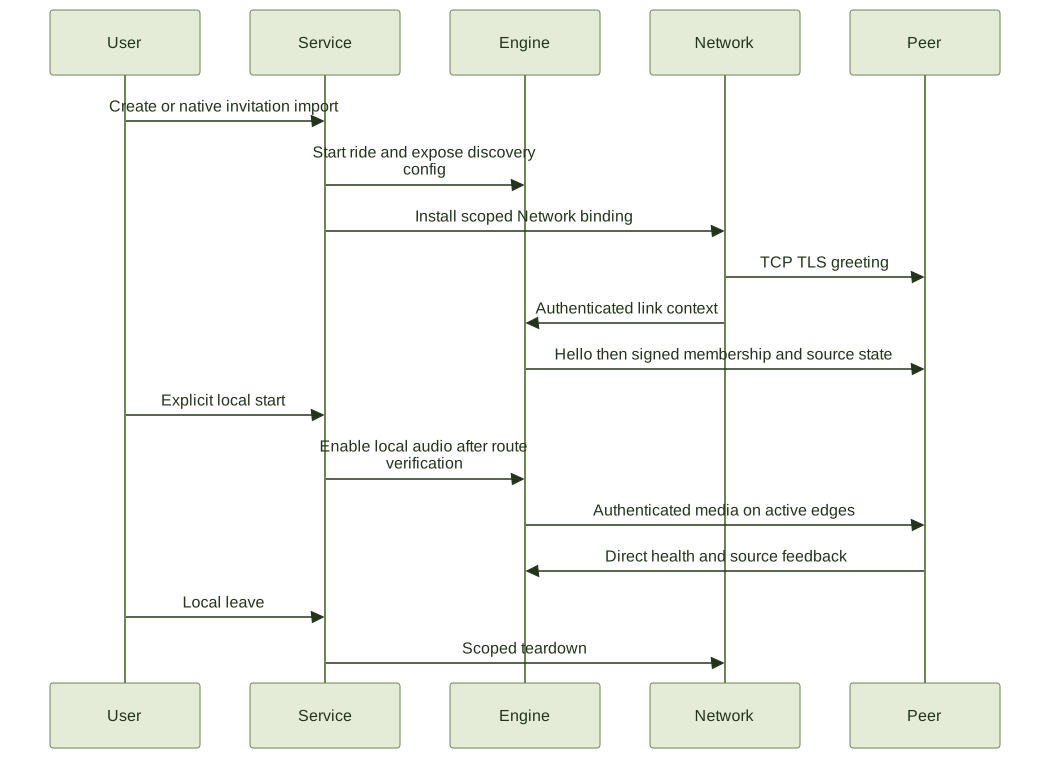
Follow one ride through the system
Start with an invitation and an organizer-approved roster. Follow discovery into an authenticated connection, then trace one voice packet across the tree. Finally, examine what changes when a parent disappears or a better route becomes available.
Authority: Architecture and native protocol. Public examples are synthetic. This guide is maintained against the private implementation; it does not imply access to its source.